
First 90 Days of Homeownership | The Buyer's Reality Check Series
Homeownership Phase

You made it through the offer, inspection, financing, closing, and move-in.
Now comes the part no one really prepares you for: actually owning the house.
Homeownership is not difficult because homes are complicated. It gets difficult because information slowly becomes scattered. A warranty goes in one drawer.
The paint color is saved in a text message. A repair receipt gets lost in an email. Six years later, something breaks—or you decide to sell—and you are trying to remember what was replaced, when it was done, and who did the work.
The first 90 days after closing are the best time to get ahead of that.
This is when you are still learning the home, noticing small issues, receiving your first utility bills, locating shutoffs, meeting service providers, and figuring out which systems may need attention. A little organization now can save you money, stress, and guesswork later.
Build Your Homeownership Record Early
Think of this as your home’s working history.
You do not need a complicated spreadsheet or a perfect filing system. A simple digital folder, home binder, or combination of both is enough. The goal is to keep the important details in one place so you can find them when you need them.
Your homeownership record should include things like:
- Closing documents, survey, title information, and insurance details
- Appliance manuals, warranties, model numbers, and service records
- HVAC, roofing, plumbing, electrical, and pest-control information
- Utility providers, account numbers, and recurring service contacts
- Repair receipts, contractor invoices, permits, and improvement records
- Paint colors, flooring details, landscaping notes, and material selections
- Before-and-after photos of repairs, updates, and upgrades
Below, you will find a 9-page slider showing how these tools work together to create a complete homeownership record. Each page is designed to be printed, saved digitally, or added to a home binder over time.
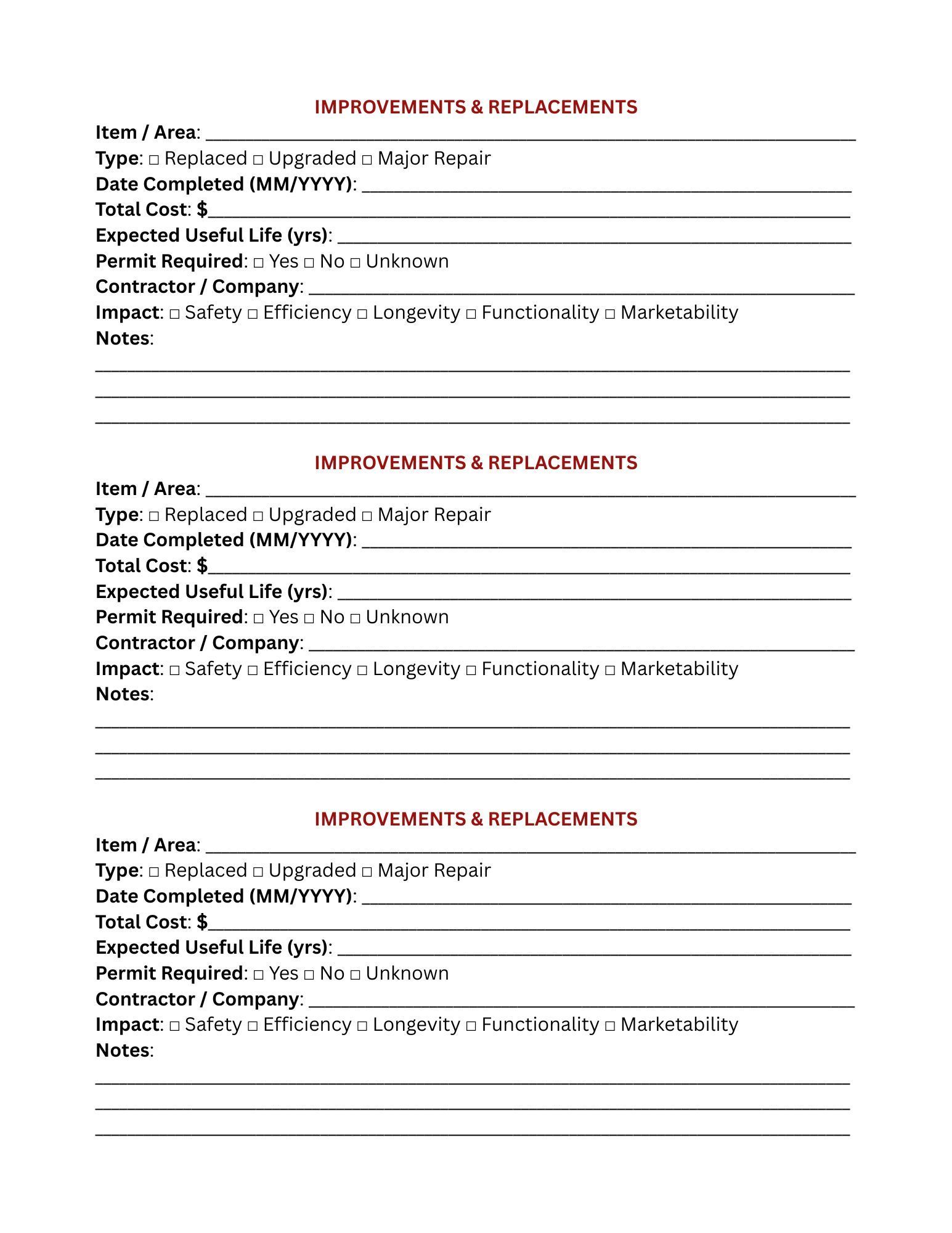
One Habit That Pays Off Later
Every time you repair, replace, or improve something in the home, take a quick photo before and after the work is completed.
It takes less than a minute, but those photos can become incredibly useful. They help you remember what was changed, support insurance conversations when needed, make future maintenance easier, and create a clear record of care when you eventually sell.
When buyers, inspectors, appraisers, or future contractors ask questions, you will not be relying on memory. You will have a record.
Why This Matters
Plan for costs instead of reacting to them
Tracking repair dates, maintenance needs, warranties, and replacement timelines helps you see what may be coming before it becomes an emergency. You may not be able to prevent every expense, but you can make fewer decisions under pressure.
Keep important information easy to find
When something leaks, stops working, or needs service, you should not have to dig through old emails or search every drawer in the house. A simple home record keeps the information you need in one place.
Make inspections and resale less stressful
When it is time to sell, buyers often want to know what has been repaired, replaced, maintained, or upgraded. A well-kept record helps you answer those questions clearly and confidently.
Support more accurate disclosures
Keeping notes on repairs, permits, warranties, and known conditions while they are fresh makes future disclosures easier to complete and less stressful to navigate.
Treat your home like the asset it is
Your home is where you live, but it is also one of the largest financial decisions you may ever make. Maintaining records helps you understand the home’s condition, costs, improvements, and long-term value more clearly.
The goal is not more paperwork.
The goal is confidence.
Confidence when something needs attention. Confidence when a contractor asks questions. Confidence when you are reviewing your budget. And confidence when it is time to move on to the next home.
Previously in the Series
👉 Closing Week Without the Panic
Start at the Beginning
Making Informed Buying Decisions Across North Texas & DFW
Buying a home is more than getting through closing. It is understanding what happens before, during, and after you get the keys.
Whether you are planning to buy in Allen, Frisco, McKinney, Plano, Prosper, Celina, Melissa, Anna, Wylie, Little Elm, Carrollton, or elsewhere across North Texas and DFW, Cindy Coggins Realty Group can help you make decisions with more clarity and less guesswork.
Message Cindy to receive your complete copy of the Buyer’s Reality Check Series and buy with clarity instead of guesswork.
📞
Call or Text:
(469) 499-7452
📧
Email:
cindycoggins@kw.com
⭐
See why so many clients trust us—check out our 5-star reviews on Google.
Disclaimer:
This series is provided for general educational purposes only and is not legal, financial, tax, lending, inspection, insurance, or real estate advice. Every buyer’s situation is different, and market conditions, loan requirements, contract terms, property conditions, timelines, and transaction decisions can vary. Readers should independently verify information and consult the appropriate qualified professionals, including a real estate agent, lender, inspector, insurance provider, title company, attorney, CPA, or other advisors as needed. Information is deemed reliable but not guaranteed.
Frequently Asked Questions About the First 90 Days of Homeownership
What should homeowners do before making major changes to the house?
Live in the home long enough to understand how the rooms function. A layout, lighting plan, storage need, or furniture decision that seems obvious during move-in may feel different after several weeks of daily use.
How should new homeowners handle all of the small purchases that come after closing?
Create a simple “house setup” budget. Things like blinds, trash cans, shelving, tools, lawn equipment, rugs, security devices, and replacement furniture can add up quickly even when nothing is wrong with the home.
Why is it helpful to meet neighbors early?
Neighbors can often share useful information that does not appear in listing documents, such as trash-day routines, neighborhood communication groups, local service recommendations, traffic patterns, drainage behavior, or seasonal events.
What should homeowners pay attention to during the first heavy rain?
Watch how water moves across the yard, driveway, gutters, windows, patios, and street. Notice standing water, overflowing gutters, drainage near the foundation, or water entering areas where it should not.
What should homeowners notice during the first period of extreme heat or cold?
Pay attention to rooms that are consistently warmer, colder, draftier, or more humid than others. Seasonal weather can reveal insulation, airflow, window, irrigation, and HVAC issues that may not have been obvious during the inspection period.
How soon should homeowners think about emergency preparedness?
Early. Know where flashlights, batteries, fire extinguishers, first-aid supplies, and emergency water are stored. Make sure household members know how to exit the home, where to meet outside, and who to contact in an emergency.
Should homeowners make changes to locks or access right after closing?
Many homeowners choose to rekey or replace exterior locks, update garage codes, reset smart-lock access, and change security-system passwords soon after move-in. It creates a clean starting point for household access.
What is one overlooked part of settling into a new home?
Learning the neighborhood rhythm. Spend time noticing school traffic, delivery patterns, parking, noise, construction, weekend activity, and nearby events. Understanding how the area functions day to day helps the house begin to feel like home.
Search Post
Recent Post






 Mr. Website Designer