
Before You Ever Tour a Home | The Buyer’s Reality Check Series
Pre-Search Phase

Buyer stress often begins long before the first showing. Unclear finances, outside opinions, and the pressure to “keep up” can create urgency without direction. That is when buyers tend to do one of two things: rush into decisions or freeze under the weight of too many unknowns.
Jumping straight into listings usually makes that worse. Price filters begin shaping expectations before a true budget is established. Emotions attach quickly. Preferences start forming before financial limits and personal priorities are clearly defined.
A lender’s approval amount is not the same as true affordability. What matters is a monthly payment that still feels comfortable after moving expenses, utilities, maintenance, savings goals, and everyday life are accounted for. Buyers should also think about post-closing reserves and longer-term financial priorities before deciding what price range genuinely works.
Before touring homes, buyers benefit from defining three things:
- Non-negotiables: what truly matters
- Flex areas: where compromise is acceptable
- Time horizon: whether this is a shorter-term purchase or a longer-term home
These guardrails help prevent emotional overreach, reduce wasted time, and make the search more intentional.
Market noise can add pressure, but it rarely provides personal clarity. Headlines, predictions, and well-meaning advice do not account for an individual buyer’s finances, goals, or life circumstances.
Starting with financial comfort and clearly defined priorities creates confidence before emotions enter the process. That foundation reduces stress, limits second-guessing, and supports better decisions at every stage of the buying journey.
The Tools That
Create Pre-Search Clarity
The pre-search phase is not about browsing homes. It is about setting clear boundaries before emotion begins shaping the search.
The three tools below are designed to be used together, in order, to help buyers establish financial comfort, clarify decision priorities, and determine whether they are truly ready to tour. Skipping those steps can lead to unnecessary stress, wasted time, and second-guessing later.
Use them at the beginning of your search, and revisit them anytime your finances, timeline, or priorities change.
How to Use These Tools Together
- Complete the Financial Reality Worksheet
Start by identifying the monthly payment, upfront costs, and post-closing reserves that feel truly comfortable.
- Define Your Priorities With the Decision Matrix
Once your financial boundaries are clear, separate your non-negotiables from the areas where you are willing to compromise.
- Confirm Readiness With the Tour Readiness Gate
Before scheduling showings, use this final check to make sure your budget, priorities, and timing are aligned enough to begin touring with purpose.
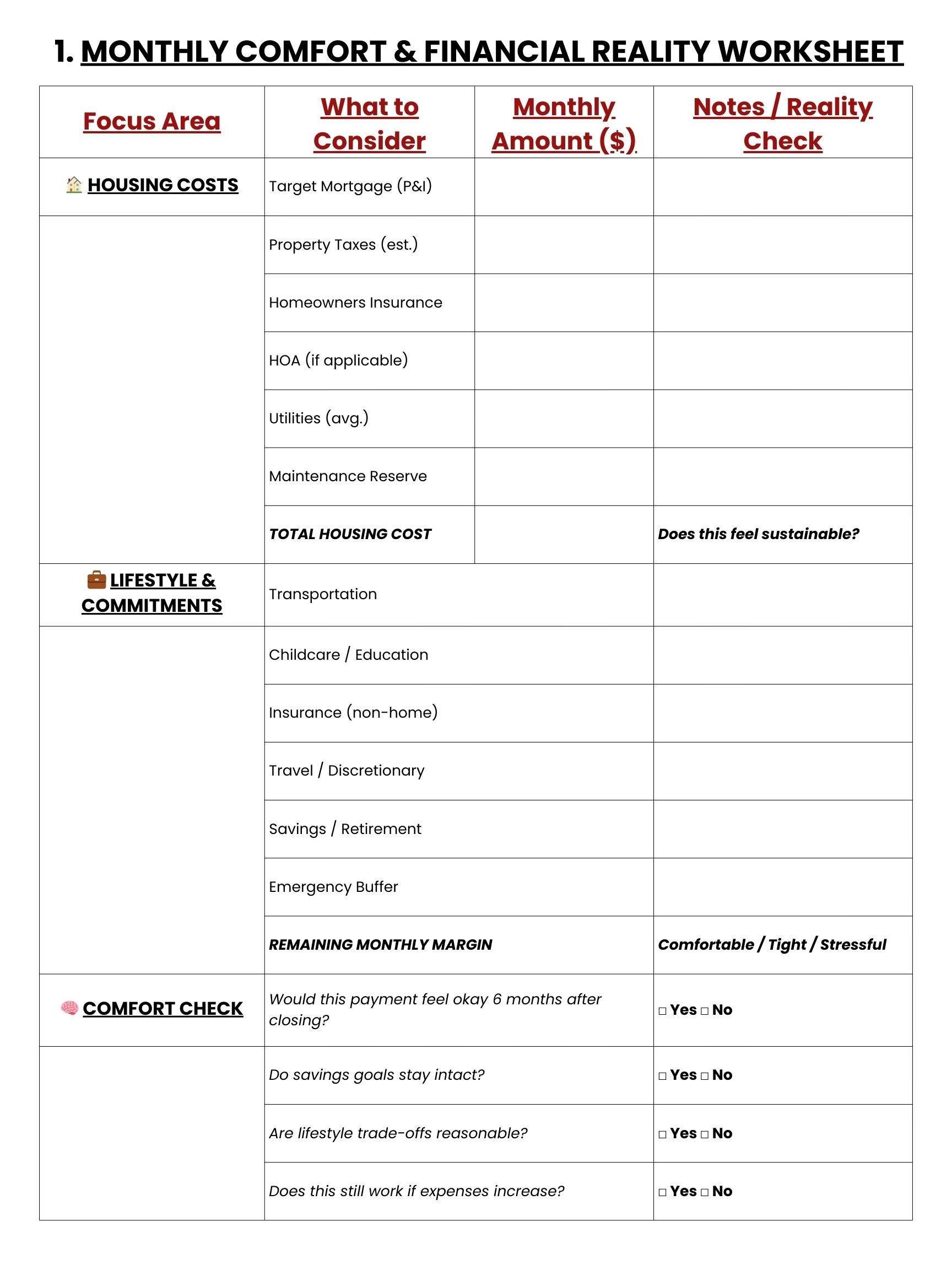
What this is:
A practical tool for determining a comfortable monthly housing payment—not simply the amount a lender may approve.
How to use it:
List your estimated housing costs alongside lifestyle expenses, savings goals, and other monthly obligations to see what truly fits after closing, not just on paper but in real life.
Why it matters:
This helps reduce the risk of financial strain, overbuying, and post-purchase regret by aligning your home payment with your long-term comfort.
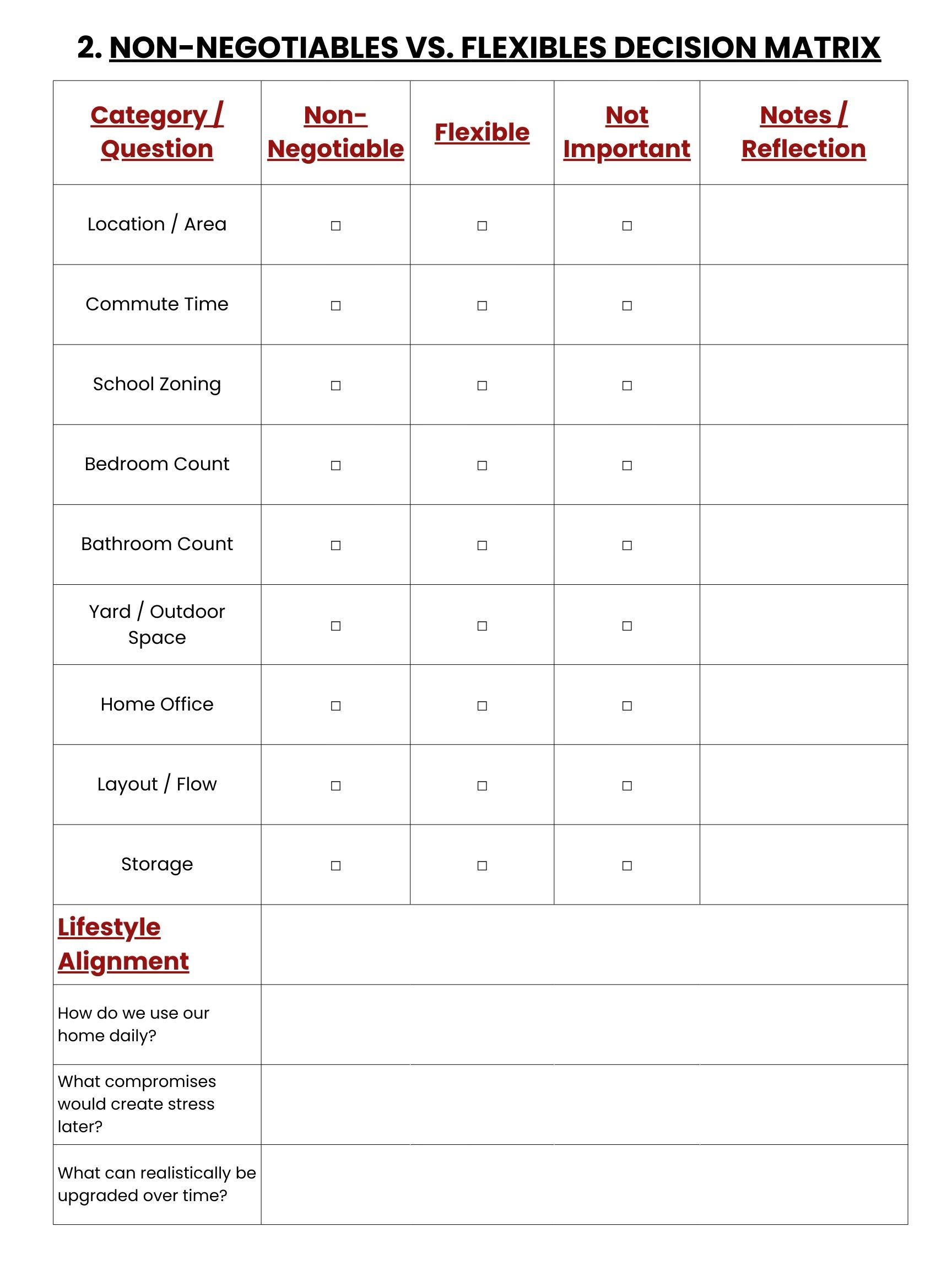
What this is:
A decision-clarity tool that helps you define what truly matters in a home—and what you can compromise on.
How to use it:
Before touring homes, categorize features as
must-have,
flexible, or
not important so emotions don’t override priorities later.
Why it matters:
Clear priorities reduce decision fatigue, speed up the search, and help you recognize the right home when you see it.
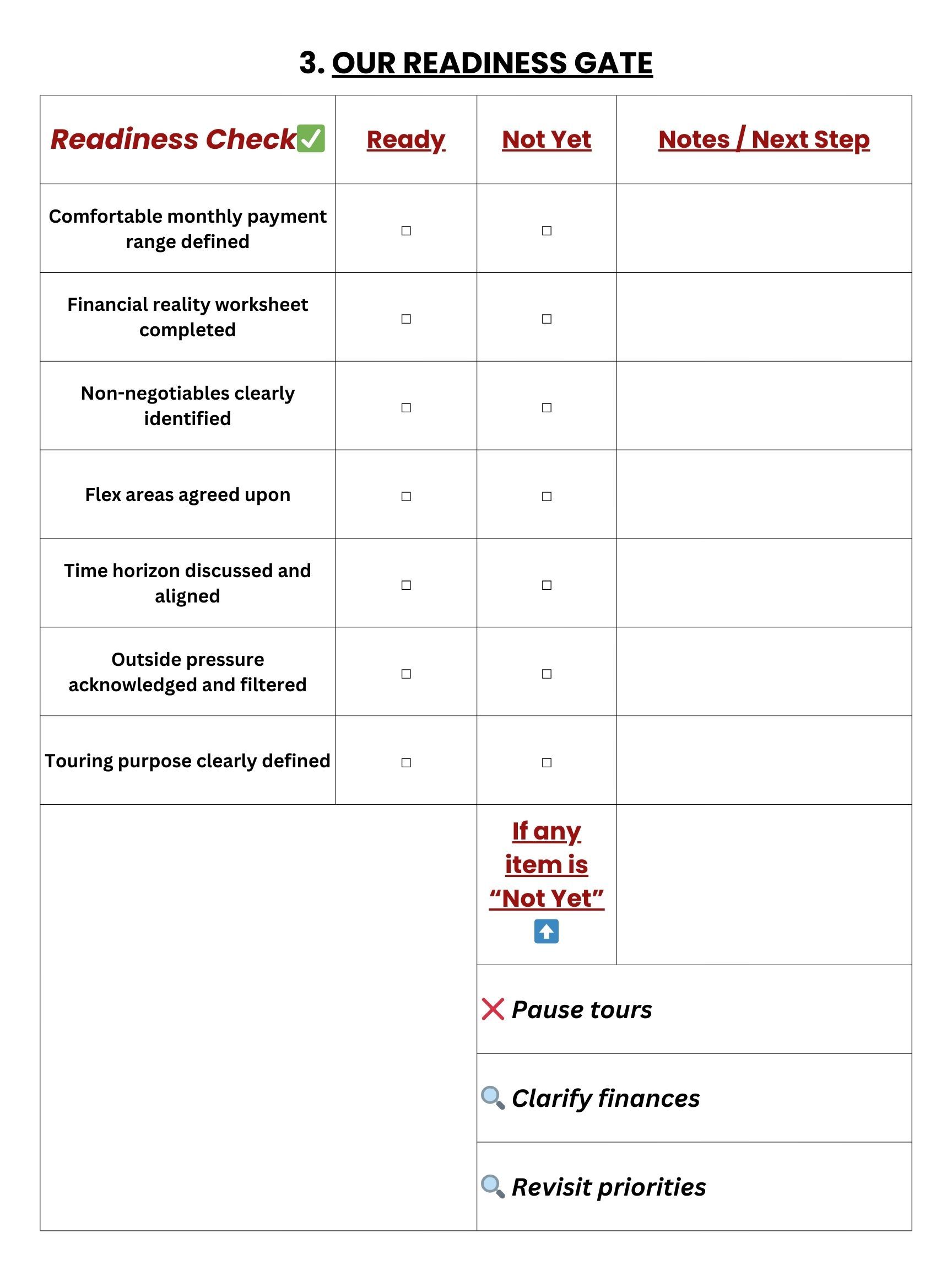
What this is:
A final readiness check to help buyers decide whether they are prepared to begin touring homes with purpose.
How to use it:
Before scheduling showings, review whether your financing, monthly comfort range, priorities, timeline, and decision-makers are aligned. If several areas still feel uncertain, it may be worth pausing before jumping into active tours.
Why it matters:
This helps buyers avoid touring too early, chasing homes that do not fit, or making rushed decisions before the foundation of the search is clear.
Frequently Asked Questions Before Touring Homes
Should buyers get preapproved before touring homes?
Yes. A preapproval helps buyers understand the loan amount they may qualify for and gives sellers more confidence if an offer is submitted. Buyers should still compare that number against their own monthly comfort level before deciding where to search.
What is the difference between being prequalified and preapproved?
Prequalification is usually an early estimate based on basic information. Preapproval typically involves a more detailed review of income, credit, assets, and documentation. Buyers should ask their lender what has actually been reviewed before relying on the number.
How much cash should buyers plan to have before buying?
Buyers should plan for more than just the down payment. Other costs may include closing costs, inspections, appraisal fees, moving expenses, utility deposits, repairs, furnishings, and post-closing reserves.
Should buyers talk to a lender or real estate agent first?
Either can be a good starting point, but both conversations are important early in the process. A lender helps clarify financing, while a real estate agent helps connect that information to local inventory, market conditions, and realistic search expectations.
How can buyers decide which areas to focus on?
Buyers should compare commute, school considerations, taxes, HOA rules, lifestyle needs, home age, neighborhood feel, and long-term plans. The best search area is not always the one with the most listings—it is the one that best fits the buyer’s actual life.
Is it okay to browse homes online before being ready to buy?
Yes, as long as buyers understand that online browsing is not the same as active shopping. Listings can be useful for learning styles, price ranges, and neighborhoods, but they should not replace financial preparation or a clear plan.
What should buyers avoid before starting the home search?
Buyers should avoid taking on new debt, making large purchases, changing jobs without lender guidance, moving large sums of money without documentation, or assuming online mortgage estimates reflect their full cost of ownership.
How early should buyers start preparing before they want to move?
Many buyers benefit from starting several months in advance, especially if they need to improve credit, save additional funds, compare neighborhoods, sell another property, or adjust their timeline. Early preparation can make the search feel less rushed.
What makes a buyer truly ready to tour homes?
A buyer is usually ready to tour when financing has been discussed, monthly comfort is clear, priorities are defined, timing is realistic, and the buyer understands what trade-offs may be necessary in the current market.
Continue the Buyer Journey
Previously:
👉
Overview
Next:
Once the search begins, decision fatigue can build quickly without structure. The next post explains how to house hunt efficiently, compare homes with greater clarity, and avoid burnout along the way.
Making Informed Buying Decisions Across
North Texas & DFW
If you are planning to buy a home in Plano, Prosper, Celina, or anywhere across North Texas and the DFW area, Cindy Coggins Realty Group can help you evaluate your options, understand how local market conditions may affect your decisions, and move forward with greater clarity at every stage of the process.
When you are ready, reach out to start the conversation and move forward with confidence.
Message Cindy to receive your complete copy of the Buyer’s Reality Check Series and buy with clarity instead of guesswork.
📞
Call or Text:
(469) 499-7452
📧
Email:
cindycoggins@kw.com
⭐
See why so many clients trust us—check out our 5-star reviews on Google.
Disclaimer:
This series is provided for general educational purposes only and is not intended as legal, financial, tax, lending, inspection, insurance, or real estate advice. Every buyer’s situation is different, and market conditions, loan requirements, contract terms, property conditions, timelines, and transaction decisions can vary. Readers should verify information independently and consult the appropriate professionals, including a real estate agent, lender, inspector, insurance provider, title company, attorney, CPA, and other qualified advisors as needed. Information is deemed reliable but not guaranteed.
Search Post
Recent Post










 Mr. Website Designer