
Before the For-Sale Sign Goes Up
What to Figure Out Before You Prepare Your Home for Sale

One of the first questions sellers usually ask is:
“What do I need to do to the house before we list?”
And I understand why.
Once selling becomes real, you start looking at your home differently. The paint suddenly looks more tired. The flooring feels more dated. That cabinet handle you have ignored for two years becomes impossible not to see.
It is very easy to start building a project list.
But before you start spending money on the house, I would back up.
Because the first questions I want answered have very little to do with paint, flooring, or landscaping. Why are you selling? Where are you going next? Approximately what do you need to walk away with? And how much flexibility do you really have if the timing does not go exactly as planned?
Those answers can affect when you list, how much you spend preparing the property, how you price, and eventually which offer may actually work best for you.
Before the for-sale sign goes up, the first job is not preparing the property. It is preparing the plan.
Start With the Outcome You Actually Need
Not every seller is trying to accomplish the same thing.
Someone relocating for work may care most about certainty and timing. A seller who is downsizing may have much more flexibility. Someone building a new home may need the current property sold before the next closing, while another homeowner may simply be looking at the equity they have built and wondering whether selling now makes sense.
Those sellers should not necessarily make the same decisions.
Most people would understandably like the highest possible price, an easy transaction, no repairs, no concessions, the perfect closing date, and plenty of time to move.
Who wouldn’t?
But real estate often involves tradeoffs.
If the strongest offer required you to close two weeks earlier than you hoped, would that still work? If accepting a slightly lower price meant avoiding another two months of carrying costs, would that matter? If a buyer wanted flexibility on possession but was stronger in other areas, how would you weigh that?
There is not one correct answer.
The important part is knowing your answer before you are trying to make the decision with an offer sitting in your inbox.
Know the Number That Actually Matters
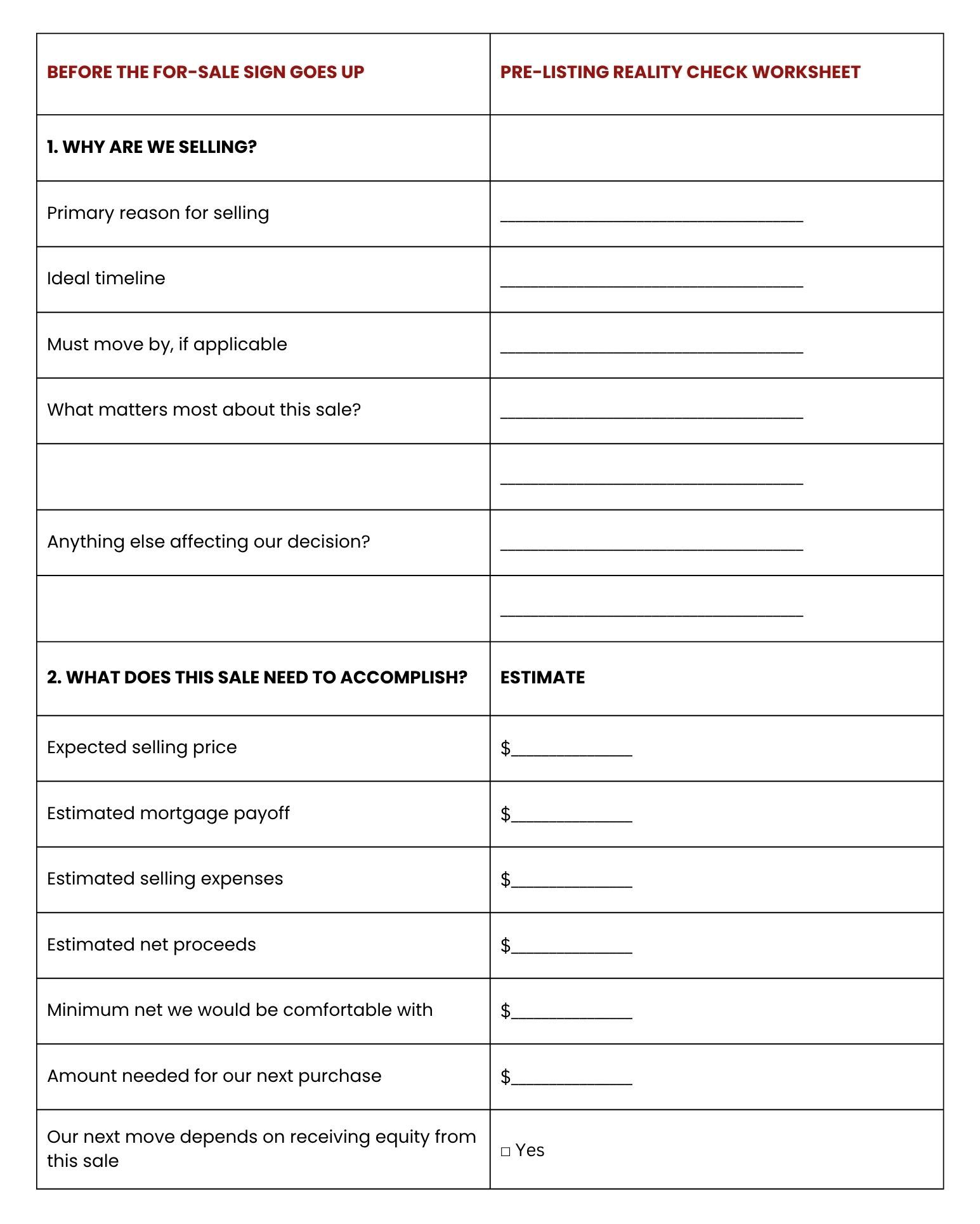
Sellers naturally focus on the sale price.
But a home selling for $500,000 does not mean you are walking away with $500,000.
The more useful number is your estimated net proceeds—what may actually be left after the mortgage payoff and the various expenses connected with the sale.
Those expenses can include transaction costs, taxes, HOA-related charges, buyer concessions, repairs, credits, moving expenses, and other property-specific costs.
That is why an estimated seller net sheet can be more useful early on than simply hearing what the home might sell for.
Suppose you are mentally planning around walking away with $150,000, but after looking at the likely payoff and estimated selling expenses, the more realistic number appears closer to $125,000.
That $25,000 difference may change the price range of your next home. It may change how much you are comfortable spending to prepare this one. In some cases, it may even change whether selling right now still makes sense.
That is useful information before you list.
It is much less comfortable to discover after you are already under contract.
Plan the Move,
Not Just the Sale
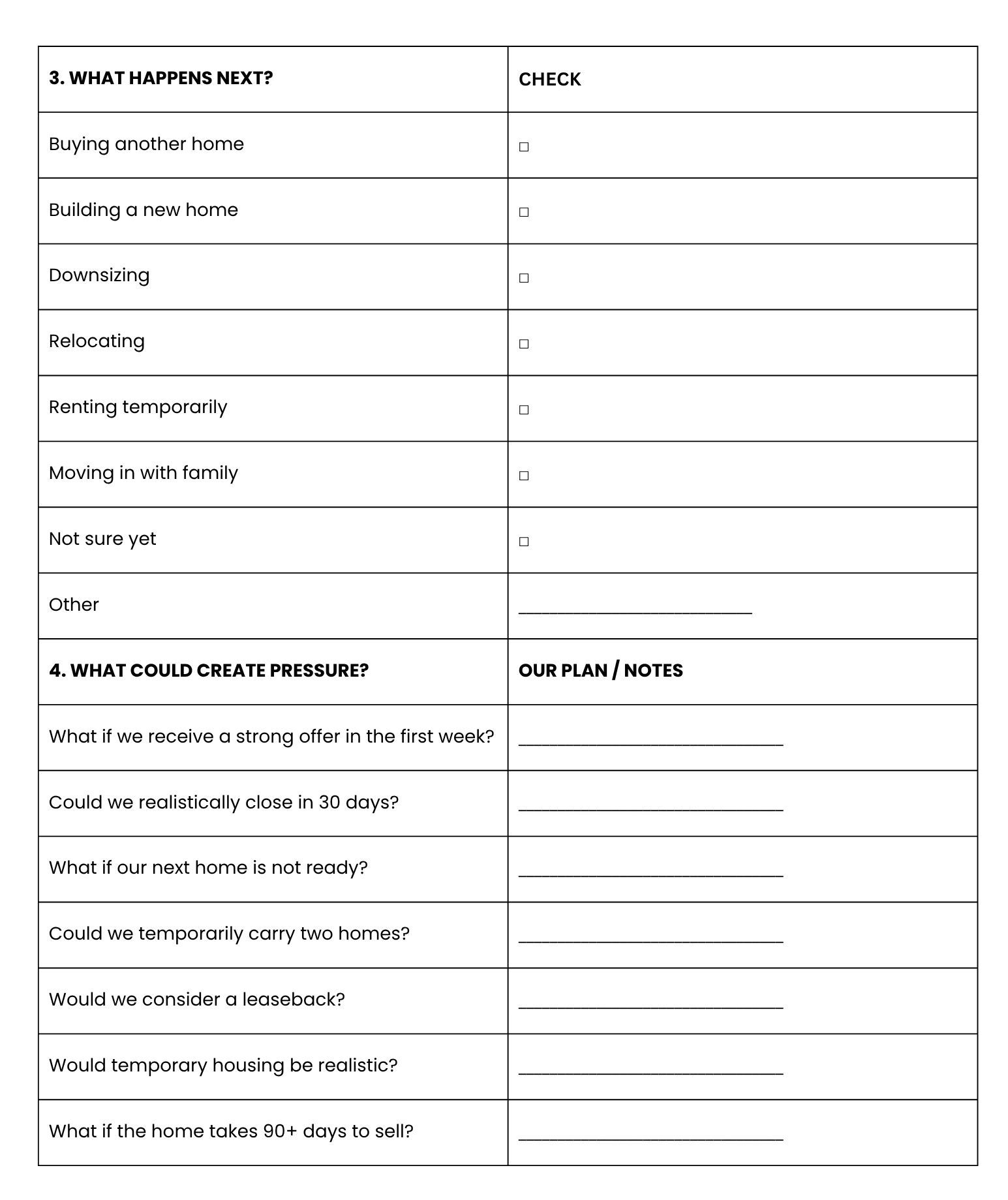
The sale of your current home and the purchase of your next one can look like two separate transactions.
Financially and logistically, they may be one plan.
If you need the equity from this home for the next purchase, timing becomes especially important. You may need to understand whether you can qualify before selling, whether the next purchase could be contingent on this sale, whether temporarily carrying both homes is realistic, or whether a leaseback could give you more breathing room.
Then there is the scenario sellers often worry about the least:
What if the home sells faster than expected?
Imagine planning for 60 days on the market and receiving a strong offer in four days with a 30-day closing.
Great news, right?
Maybe.
If your new home will not be ready for another three months, suddenly that fast sale creates another set of decisions. Where will you live? Where does the furniture go? What happens with pets or children? Are you willing to move twice?
A fast sale is only a great outcome if the rest of the plan can support it.
The opposite deserves attention too. If the home takes three months instead of three weeks, the mortgage, insurance, utilities, maintenance, and other carrying costs continue. If your next purchase depends on the proceeds from this home, that longer timeline can create pressure somewhere else.
You cannot control exactly how quickly the market will respond.
You can decide in advance how much flexibility you have.
Look at the Market Before You Start Improving the House
This is where I would resist the urge to start renovating.
A seller may look at older countertops and immediately think they need to be replaced. But that decision should depend partly on what buyers can already choose in the same price range.
If comparable homes with similar finishes are selling well, replacing those countertops may solve a problem buyers never actually had.
If nearly every competing home has been updated and those properties are consistently winning buyers, that is a different conversation.
The same applies to flooring, paint, appliances, landscaping, and other improvements.
The question is not simply:
“Would this look better if we updated it?”
Of course it probably would.
The better question is:
“Would this improve the sale enough to justify the cost, time, and effort?”
That is where market context matters.
We will get much deeper into preparation in the next article, but for now the rule is simple:
Do not start with the project. Start with the problem you are trying to solve.
Find the Things That Could Slow the Transaction Down
Not every pre-listing issue is visible in the house.
Some of the most frustrating problems show up in paperwork.
This is a good time to locate anything you already have that may become important later: an existing survey, HOA documents, warranties or receipts for major work, and records involving the roof, HVAC, water heater, windows, foundation, or other significant improvements.
I would also want to know about anything less obvious that could affect the transaction. Was substantial work permitted when required? Is there a solar agreement, lease, lien, financing arrangement, or other contract tied to the property?
You may not need every document.
But imagine learning three days before closing that something everyone assumed existed cannot be found—or that an agreement attached to the property needs to be addressed before title can move forward.
Same issue.
Very different amount of pressure.
This is also the right time to talk about anything you already know about the property's condition.
That does not mean every issue automatically needs to be repaired before listing.
It means we would rather decide how to handle it before a buyer is setting the timeline.
Decide How Showing the Home Will Actually Work
Once the home is active, buyers may want to see it quickly.
That does not mean you need to make your life miserable to sell your house.
It does mean we should build a showing plan that works in real life.
If you work from home, how much notice do you need? What happens with pets? Are there children's schedules to work around? Are there certain times that are genuinely difficult?
The goal is not unlimited access.
But access does affect opportunity.
A buyer who cannot see your home when they are available may simply move on to the next property.
That does not mean you should accept every inconvenient showing request. It means the access strategy should reflect both your life and the realities of being on the market.
You Do Not Need Every Answer Before You Begin
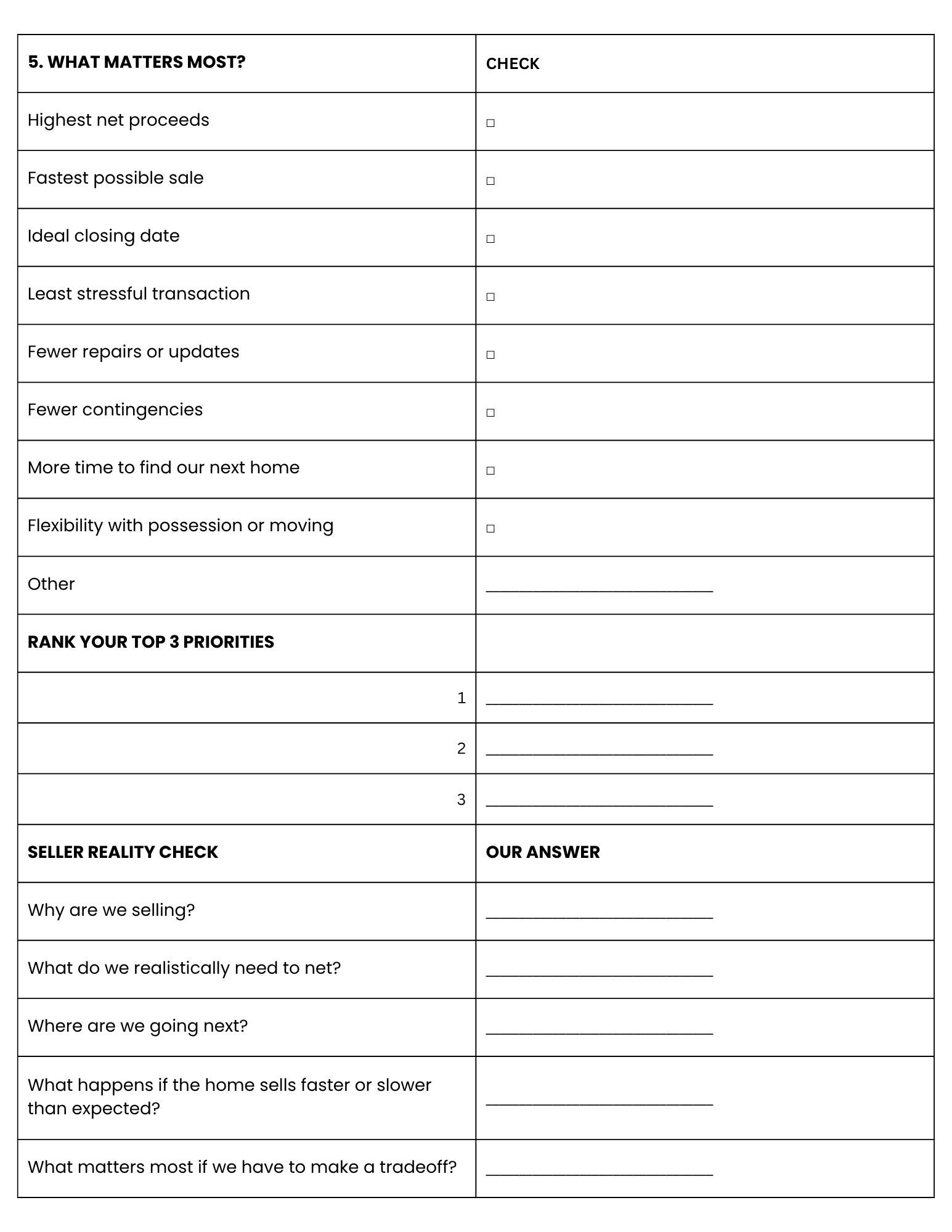
Planning ahead does not mean predicting the future.
You will not know exactly how quickly the home will sell. You cannot know what every buyer will ask for. Your own plans may change somewhere along the way.
That is normal.
What I want you to understand before listing is the bigger picture: why you are selling, what you are likely to net, where you are going next, how dependent that move is on this sale, and where your flexibility begins to disappear.
Then think through both ends of the timeline.
What would happen if the home sold almost immediately?
What would happen if it took considerably longer than expected?
You do not need a perfect answer to every possibility.
You just need enough of a plan that the transaction is not making all of those decisions for you.
The Bottom Line
The first step in selling a home is not ordering the sign, scheduling photography, or deciding whether the dining room needs new paint.
It is understanding the sale you are trying to create.
What does this home need to accomplish financially? Where are you going next? How much flexibility do you really have? And which tradeoffs would you be willing—or unwilling—to make?
Once those answers are clearer, decisions about preparation, pricing, timing, and eventually offers become much easier to evaluate.
Build the plan first. Then prepare the house around that plan—not the other way around.
Next in the Seller’s Reality Check Series:
👉 Preparing Your Home Without Overspending (release date: 10/8/2026)
(Start at the beginning:
Selling a Home, Clearly | The Seller’s Reality Check Series
)
Once the larger plan makes sense, the next question is what—if anything—you should actually do to the house.
Which repairs are worth making? When does an update improve marketability, and when are you simply renovating for the next owner? Could cleaning, touch-ups, or better presentation solve the problem without a major project?
That is what we will tackle next.
Message Cindy to receive your complete copy of the Seller’s Reality Check Series and sell with clarity instead of guesswork.
📞
Call or Text:
(469) 499-7452
??
Email:
cindycoggins@kw.com
⭐
See why so many clients trust us—check out our 5-star reviews on Google.
Disclaimer:
This series is provided for general educational purposes only and is not intended as legal, financial, tax, lending, inspection, insurance, appraisal, title, accounting, or real estate advice. Every seller’s situation is different, and market conditions, property condition, contract terms, financing, appraisal results, closing costs, tax consequences, timelines, and transaction decisions can vary. Readers should verify information independently and consult the appropriate professionals, including a real estate agent, lender, inspector, insurance provider, appraiser, title company, attorney, CPA, tax professional, and other qualified advisors as needed. Information is deemed reliable but not guaranteed.
Search Post
Recent Post










 Mr. Website Designer