
Selling a Home, Clearly | The Seller’s Reality Check Series
A Phase-by-Phase
Guide to Selling a Home

Most seller guides explain the steps of putting a home on the market.
Far fewer explain the decisions homeowners are trying to make while those steps unfold.
How much should you do to the house before listing? Which repairs are worth making? How do you choose a price without starting too high—or leaving money on the table? What should you think when buyers are showing up but no one is writing an offer? And when an offer finally arrives, how do you know whether the highest price is actually the best deal?
Those decisions are rarely happening in isolation.
Sellers are often trying to make them while packing, planning another move, watching carrying costs, managing work and family, and wondering whether saying yes—or no—to something now will cost them later.
At Cindy Coggins Realty Group, our role is to help sellers understand those decisions, evaluate their options clearly, and make informed choices throughout the sale—not simply move from one transaction deadline to the next.
That is why we created the Seller’s Reality Check Series: a phase-by-phase guide designed to help homeowners understand what is happening, recognize the decisions that matter most, and reduce avoidable surprises along the way.
The Seller’s
Reality Check Series
Selling a home is not one decision.
It is a series of decisions, and the right answer can change depending on your home, your market, your timing, your finances, and what you are ultimately trying to accomplish.
You may prepare the home carefully and still wonder whether you spent too much. You may receive plenty of showings and no offers. An offer may look great at first glance but become less attractive once you consider the terms. And even after you are under contract, inspections, appraisal, financing, moving logistics, and closing can create another round of decisions.
This series is designed to help you understand those moments before they feel urgent.
You can read it from beginning to end or jump directly to the stage that applies to you now.
Selling a Home
Is Not Just About the House
One of the easiest mistakes sellers can make is treating the property as if it exists in isolation.
It does not.
Your home is competing with other properties buyers can choose. Your price affects which buyers consider it, its condition affects how buyers compare it with the alternatives, and your own timeline can affect how much flexibility you have when negotiating.
A seller who needs the proceeds to purchase another home may make very different decisions from someone who can comfortably own both properties for a period of time. A home competing against two similar listings may need a different strategy from one competing against ten.
That is why the question is not simply:
“How much can I get for my house?”
It is also:
“What is happening around my house, how should that affect the decisions I make, and what does this sale actually need to accomplish for me?”
Some of the Most Important
Decisions Happen Before You List
Before buyers ever see the home, there are already important choices to make.
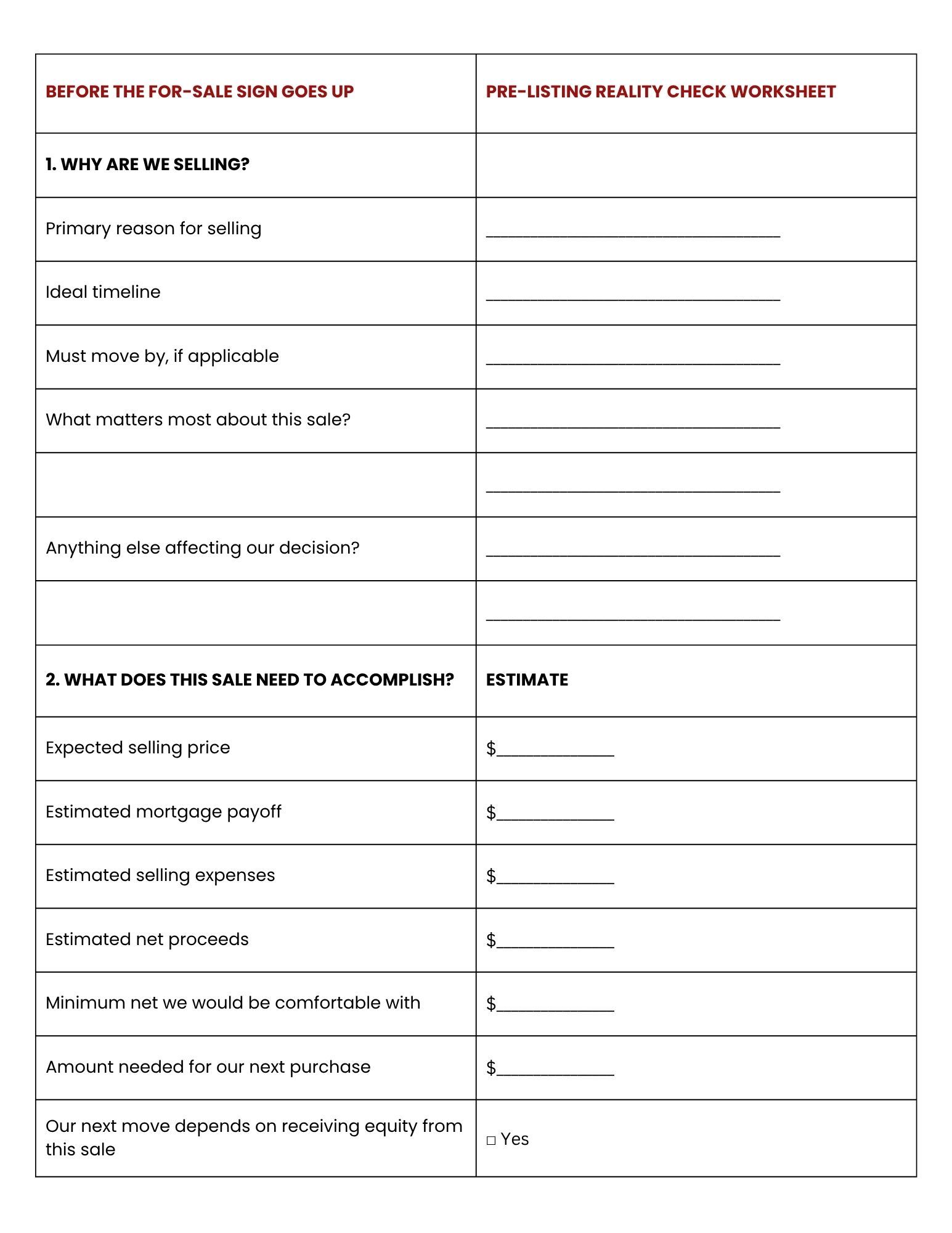
How much should you spend preparing it? When should you list? What might you realistically net? Where are you going next, and does that move depend on this home selling first?
Those questions are connected.
If you treat them as separate decisions, it becomes much easier to create problems later. You might spend heavily on improvements before looking closely at competing homes, commit to a new purchase before understanding what you are likely to walk away with from the current one, or choose a listing date without thinking through what happens if the home sells immediately.
The goal is not to predict everything.
It is to make sure the major pieces fit together before the market starts making decisions for you.
The Market Keeps
Giving You New Information
Before listing, you make decisions based on the information you have.
Once the home is active, the market begins giving you new information.
Maybe buyers are looking online but not scheduling showings. Maybe they are touring the home but not writing offers. Perhaps the same concern keeps appearing in feedback, new competition enters the market, or your price range starts moving differently than it did a few weeks earlier.
Then an offer arrives.
At first glance, it may look strong. But once you consider financing, concessions, appraisal exposure, timing, contingencies, and the buyer’s overall ability to perform, does it still look as strong?
And once you are under contract, an inspection, appraisal, title issue, or change in buyer financing may create another decision.
That is why a good selling strategy cannot be decided entirely before the sign goes in the yard.
You start with a plan. Then you pay attention.
The Seller’s Reality Check
You probably will not control every part of the sale.
You cannot control which buyers are shopping the week you list, what interest rates do, what an inspector finds, or whether an appraiser agrees with the contract price. You also cannot guarantee that every part of the transaction will happen exactly when you want it to.
But you can control how prepared you are.
You can understand your priorities, pay attention to what the market is telling you, and make decisions based on information rather than frustration.
That is what this series is about.
What’s Coming Next
- Before the For-Sale Sign Goes Up (release date: 10/7/26)
What should you understand before deciding when—or whether—to list?
We will look at your goals, likely proceeds, timing, next move, and the decisions that are easier to make before buyers are involved.
- Preparing Your Home Without Overspending (release date: 10/8/26)
Should you replace the carpet, paint the whole house, or update the kitchen?
Maybe.
But spending more before listing does not automatically mean walking away with more after closing. We will look at what may actually help—and where sellers can spend money without materially improving the outcome.
- Pricing Without Chasing the Market (release date: 10/9/26)
How do you choose a price that protects your position without starting so high that buyers begin comparing your home with better alternatives?
We will look at comparable sales, current competition, inventory, buyer behavior, and what happens when the market does not respond the way you expected.
- Going Live: What Happens After Your Home Hits the Market (release date: 10/12/26)
Once the photos are online and the listing is active, the real market feedback begins.
We will look at early showing activity, online response, buyer feedback, competing listings, and what those first days and weeks may actually be telling you.
- When the House Is Not Selling (release date: 10/13/26)
A quiet listing is frustrating, but immediately reducing the price without understanding the problem can be costly too.
We will look at price, presentation, access, competition, buyer activity, and market changes before deciding what should change.
- Evaluating an Offer Beyond the Price (release date: 10/14/26)
The highest number at the top of the page does not automatically make it the strongest offer.
We will look at financing, concessions, contingencies, option periods, appraisal exposure, closing dates, possession, and the buyer’s likelihood of actually reaching closing.
- Inspections, Repairs & the Second Negotiation (release date: 10/15/26)
Getting under contract does not always mean the negotiating is over.
We will look at inspection findings, repair requests, credits, buyer concerns, and how to evaluate what deserves attention without reacting to every item on an inspection report.
- Appraisal, Financing & the Waiting Game (release date: 10/16/26)
Several important things are happening behind the scenes while the transaction moves toward closing.
We will explain appraisal, underwriting, title, buyer financing, and what sellers should understand while much of the process is temporarily out of their hands.
- Closing Week Without the Scramble (release date: 10/19/26)
Closing week is more than packing boxes.
We will cover the final walkthrough, agreed repairs, utilities, keys, possession, closing documents, funding, and what actually has to happen before the sale is finished.
- After the Sale (release date: 10/20/26)
The house may be sold, but a few things still deserve attention.
We will cover records, address changes, tax documents, and practical post-closing details that are easy to overlook during a move.
Each post connects to the next—and back to the one before it—so you can follow the process in order or go directly to the phase that matters most.
👉 Start with Before the For-Sale Sign Goes Up
(release date: 10/7/26)
Making Informed Selling
Decisions Across North Texas & DFW
If you are thinking about selling a home in Allen, Frisco, McKinney, Plano, Melissa, or anywhere across North Texas and the DFW area, you do not need to wait until you are ready to put a sign in the yard.
In fact, I would rather talk before you repaint the entire house, replace the flooring, or make a major decision based on what you think buyers want.
Sometimes the most valuable advice I can give a seller months before listing is:
“Yes, I would do that.”
And sometimes it is:
“I would not spend the money.”
At Cindy Coggins Realty Group, we can help you evaluate the market, understand your options, and build a selling plan around what you actually need the sale to accomplish.
Message Cindy to receive your complete copy of the Seller’s Reality Check Series and sell with clarity instead of guesswork.
📞
Call or Text:
(469) 499-7452
📧
Email:
cindycoggins@kw.com
⭐
See why so many clients trust us—check out our 5-star reviews on Google.
Disclaimer:
This series is provided for general educational purposes only and is not intended as legal, financial, tax, lending, inspection, insurance, appraisal, title, accounting, or real estate advice. Every seller’s situation is different, and market conditions, property condition, contract terms, financing, appraisal results, closing costs, tax consequences, timelines, and transaction decisions can vary. Readers should verify information independently and consult the appropriate professionals, including a real estate agent, lender, inspector, insurance provider, appraiser, title company, attorney, CPA, tax professional, and other qualified advisors as needed. Information is deemed reliable but not guaranteed.
Search Post
Recent Post









 Mr. Website Designer