
How North Texas Home Sellers Can Maximize Their Net Proceeds
How Home Staging Helps Sellers Negotiate Stronger Offers
When a home sells quickly and near its asking price in North Texas, it’s rarely by chance. In competitive markets across Collin County and the greater Dallas–Fort Worth area—including Allen, McKinney, Plano, and Frisco—outcomes are typically driven by strategy, not luck. The way a home is presented often determines whether a seller maintains negotiating leverage or gives it away through concessions.
Behind every successful sale are three core factors: presentation, price, and terms. Most sellers instinctively focus on price, assuming it carries the most weight. However, experienced and strategic sellers recognize that presentation plays a direct role in shaping negotiation outcomes—particularly when it comes to concessions. Ultimately, these decisions influence what a seller actually walks away with at closing.

Why Staging Isn’t Cosmetic—
It’s Negotiation Strategy
Staging is often misunderstood as simple decoration, but its true purpose is far more strategic. At its core, staging reduces buyer hesitation. When buyers can easily picture themselves living in a home, their confidence increases—and that confidence translates into stronger offers and smoother negotiations.
According to the National Association of REALTORS®, 83% of buyers’ agents say staging makes it easier for buyers to visualize a property as their future home, and agents report that staged homes tend to receive stronger offers with less resistance during negotiations.¹
In a market like North Texas, even a modest increase in buyer confidence can significantly impact a seller’s net proceeds. That outcome isn’t cosmetic—it’s financial.
Visualization builds confidence. Confidence reduces buyer nitpicking. And reduced nitpicking leads to fewer concession demands—this is where presentation begins to directly protect a seller’s return.
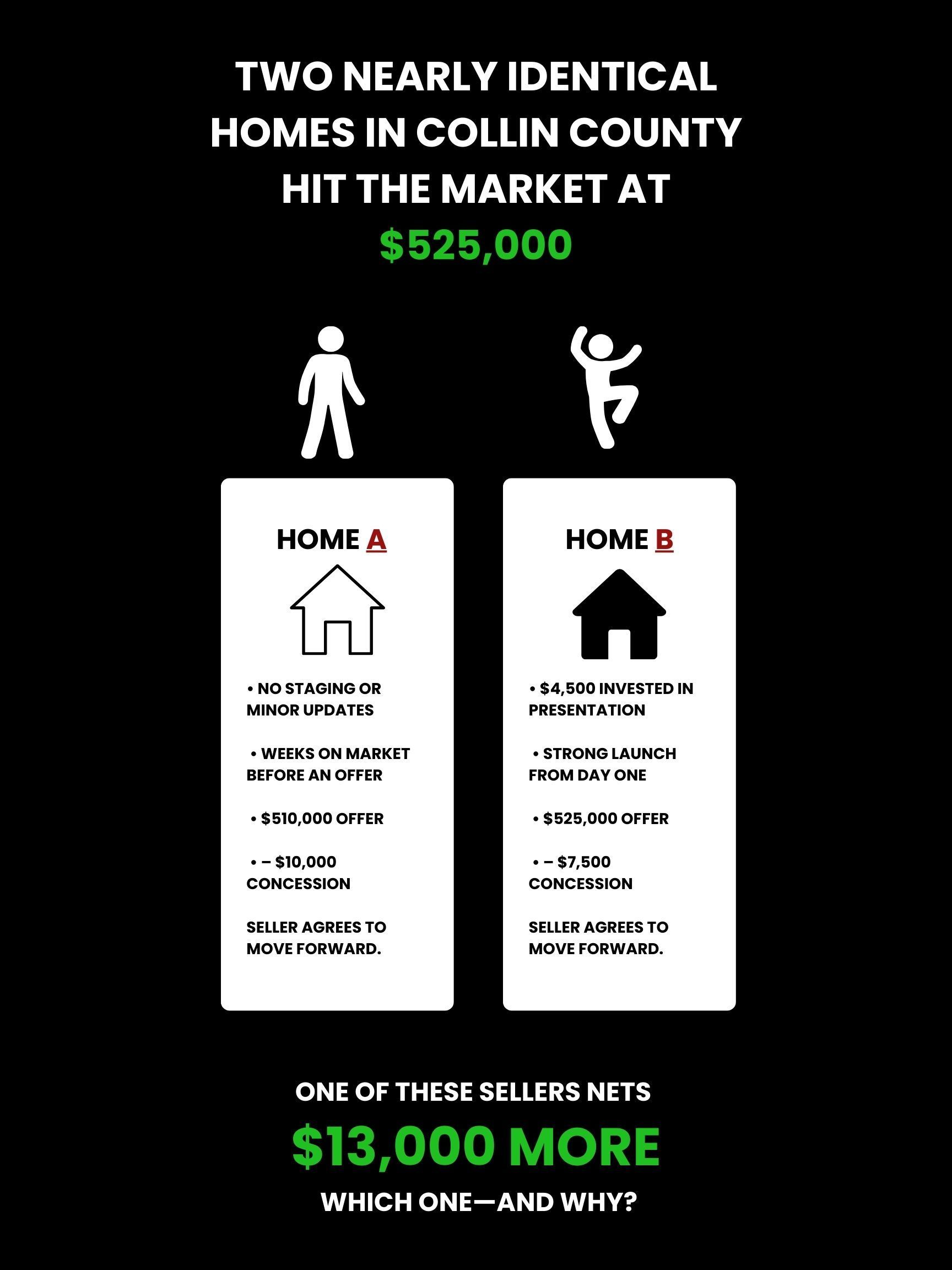
How Home Staging Can Reduce Seller Concessions
Seller concessions have become increasingly common across the U.S. housing market. In fact, 44.4% of home-sale transactions in the first quarter of 2025 included seller concessions, highlighting how frequently they factor into negotiations.²
The key question for sellers isn’t whether concessions will come into play—it’s whether they will be negotiating from a position of strength or reacting under pressure.
Strong presentation shifts that balance. When a home appears well-maintained and move-in ready, it reduces perceived future expenses, minimizes condition concerns, and discourages aggressive negotiation behavior. Buyers are less likely to stack concession requests when they feel confident about the home’s quality.
Conversely, when a home feels incomplete or neglected, buyers begin mentally subtracting value. They anticipate additional costs, heighten their scrutiny, and often request larger concessions to offset perceived risks. That difference can significantly alter a seller’s bottom line.
Which Rooms Matter Most When Selling a Home
Not all areas of a home carry equal weight in a buyer’s decision-making process. Research shows the living room, primary bedroom, and kitchen have the greatest impact on buyers.¹
These spaces anchor how buyers envision daily life. The living room represents connection and routine, the primary bedroom signals comfort and retreat, and the kitchen reflects both functionality and long-term value.
When these rooms feel cohesive and updated, buyers often extend that confidence to the rest of the home. This subconscious effect reduces hesitation and supports stronger offers.
Why Paint Is Often the Highest ROI Upgrade
Among all pre-sale improvements, fresh paint consistently ranks as one of the most cost-effective.¹ In established neighborhoods throughout McKinney, Allen, and Plano, a clean, neutral color palette can significantly influence buyer perception.
Fresh paint signals maintenance, brightens listing photos, neutralizes distractions, and eliminates what buyers often see as an immediate post-purchase expense. When buyers don’t feel the need to repaint, sellers are better positioned to maintain pricing power and avoid concession pressure.
When Seller Concessions Make Sense
Concessions are not giveaways—they are negotiation tools. When used strategically, they can attract buyers, address affordability concerns, keep deals together, and help preserve the contract price.
However, their effectiveness depends heavily on presentation. When a home shows well, concessions are typically viewed as practical solutions, such as helping with closing costs. When a home appears neglected, concessions can signal underlying issues, prompting buyers to request even more.
When buyers feel confident instead of cautious, negotiations tend to be simpler, cleaner, and more controlled. That difference directly impacts how much a seller ultimately retains.
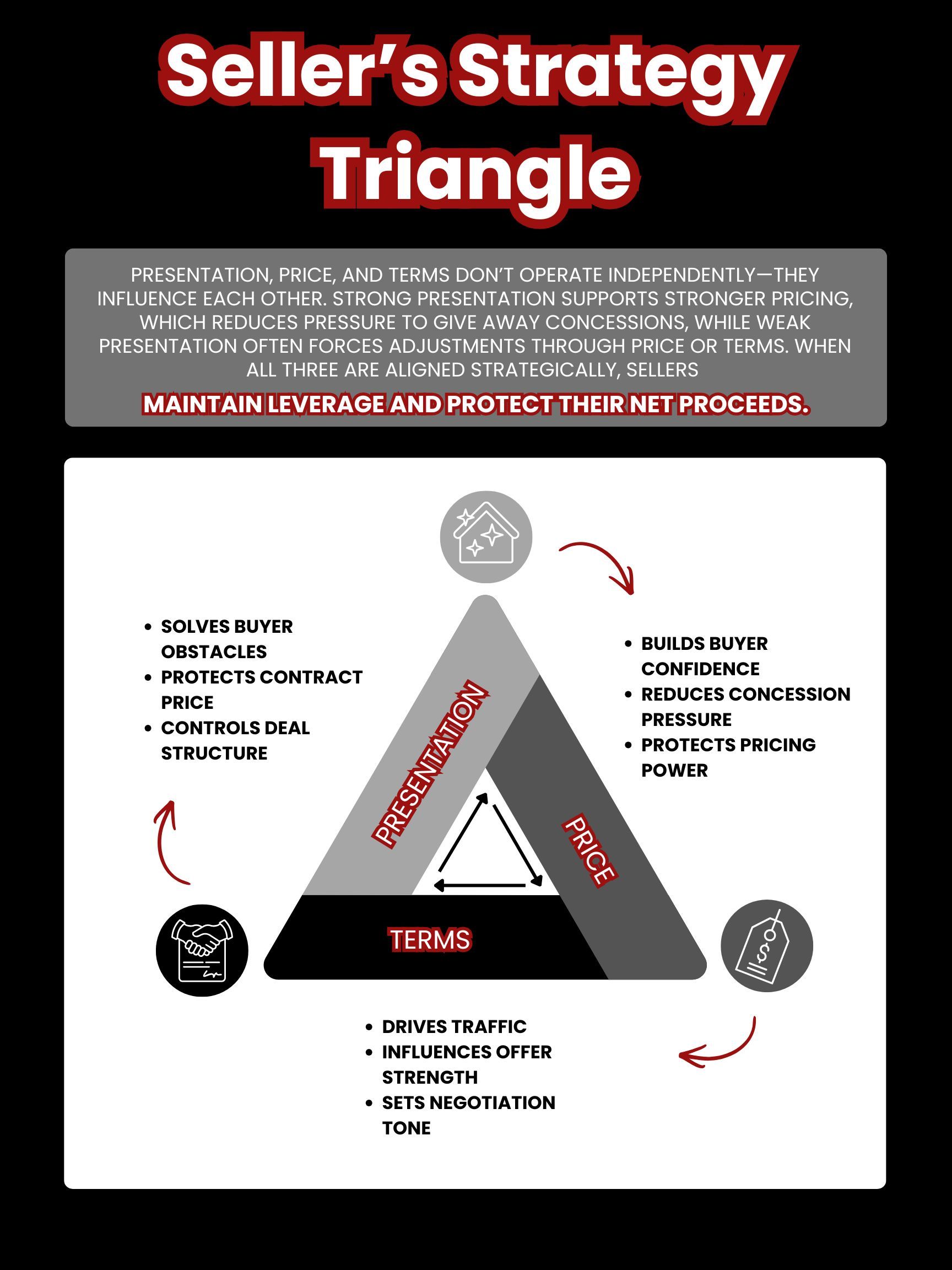
How Cindy Coggins Realty Group Helps North Texas Sellers Protect Their Bottom Line
Preparation should be intentional and data-driven, not emotional or reactive. A thoughtful approach focuses on maximizing return rather than simply minimizing upfront costs.
Cindy Coggins Realty Group takes a strategy-first approach, including detailed walkthroughs with ROI prioritization, a focus on high-impact areas, cost-versus-net modeling before improvements, and market-based concession planning. In Collin County and across North Texas, small adjustments often create significant differences in outcome.
Staging, targeted updates, and concessions are interconnected financial levers. A relatively modest investment in preparation can translate into a significant difference in net proceeds.
In today’s competitive North Texas market, preparation protects leverage—and return.
If you’re considering selling, the next step isn’t guessing—it’s having a clear, strategic plan tailored to your home. We can also connect you with trusted local professionals to provide quotes for any recommended updates, so every decision is grounded in real numbers—not assumptions.
Frequently Asked Questions About Home Staging, Upgrades, and Seller Concessions
Is professional staging worth the cost?
The answer depends on the home's condition, price point, and target buyer. Some properties benefit from full-service staging, while others may only need furniture rearrangement, decluttering, or accessory updates. A listing consultation can help determine the most cost-effective approach.
Should I stage every room in my home?
Not necessarily. Sellers often see the greatest benefit from focusing on primary living spaces, while secondary rooms may require only basic organization and cleaning. The goal is to help buyers understand how the home functions without overspending on preparation.
Which home improvements typically have the lowest return before selling?
Highly personalized renovations, luxury upgrades that exceed neighborhood standards, and projects that remain unfinished during the listing period often provide limited return. Improvements should generally align with buyer expectations for the local market.
Is it better to make repairs before listing or offer a concession instead?
That depends on the issue. Some repairs are inexpensive and can eliminate buyer concerns before they arise. Other items may be better addressed through negotiation. The right approach often depends on the cost, timing, and market conditions.
Do buyers expect seller concessions in every transaction?
No. Concessions are negotiated on a case-by-case basis. Market conditions, inventory levels, financing needs, property condition, and buyer demand all influence whether concessions become part of the agreement.
Can seller concessions help attract more buyers?
In some situations, yes. Offering concessions toward closing costs or other allowable expenses can improve affordability for buyers and potentially expand the pool of interested purchasers.
What upgrades should sellers avoid right before listing?
Major remodeling projects with long timelines or uncertain returns may not make financial sense immediately before a sale. Sellers often benefit more from addressing maintenance issues, improving presentation, and focusing on updates buyers notice first.
Should a home be staged differently depending on the target buyer?
Often, yes. A downtown condo, luxury property, family home, and active-adult residence may appeal to different buyers. Effective staging highlights features that are most likely to resonate with the property's expected audience.
Can too much staging hurt a home's appeal?
Overly personalized decor, excessive furniture, or staging that makes rooms feel smaller can distract buyers. Effective staging is designed to showcase the home's features rather than draw attention to the furnishings themselves.
How do sellers decide whether an upgrade is worth the investment?
A useful approach is comparing the estimated cost of the improvement with its likely impact on marketability, buyer perception, and potential negotiation outcomes. Not every upgrade increases value, but some can help reduce objections and strengthen offers.
A brief conversation can help you identify where to invest, where to hold back, and how to position your property for the strongest possible outcome.
📞 Call or Text: (469) 499-7452
📧 Email:
cindycoggins@kw.com
⭐ See why so many clients trust us—check out our 5-star reviews on Google.
Sources:
[1] National Association of REALTORS® (NAR).
2025 Profile of Home Staging; Remodeling Impact Report; Consumer Guides on Seller Concessions.
www.nar.realtor
[2] Redfin.
“Nearly 44% of U.S. Home Sales Included Seller Concessions in Q1 2025.”
www.redfin.com/news
Disclaimer: All information, examples, and estimates are provided for general informational purposes only and are not guaranteed. Real estate outcomes—including sale price, timing, and net proceeds—vary based on market conditions, property characteristics, and buyer behavior. Any suggested improvements or vendor referrals are optional; third-party providers are independent, and sellers should conduct their own due diligence before proceeding.

Search Post
Recent Post










 Mr. Website Designer