
Inspections, Repairs & the Second Negotiation
What Happens When the Buyer Gets a Closer Look

Getting under contract feels like a major hurdle has been cleared.
And it has.
Then the inspection happens.
Suddenly, sellers can go from celebrating the contract to looking at pages of comments about a home they may have lived in for years without thinking twice about many of those things.
That can make the inspection period feel more alarming than it needs to.
The buyer is doing something they could not fully do during a showing: taking a much closer look at what they are buying.
That may uncover legitimate concerns. It may also uncover ordinary wear, deferred maintenance, aging components, cosmetic issues, or conditions that are simply typical for a home of that age.
So the question is not how long the report is.
It is:
What did the buyer learn that materially changes the deal?
That is where the second negotiation begins.
The Inspection Report Is Information, Not the Negotiation
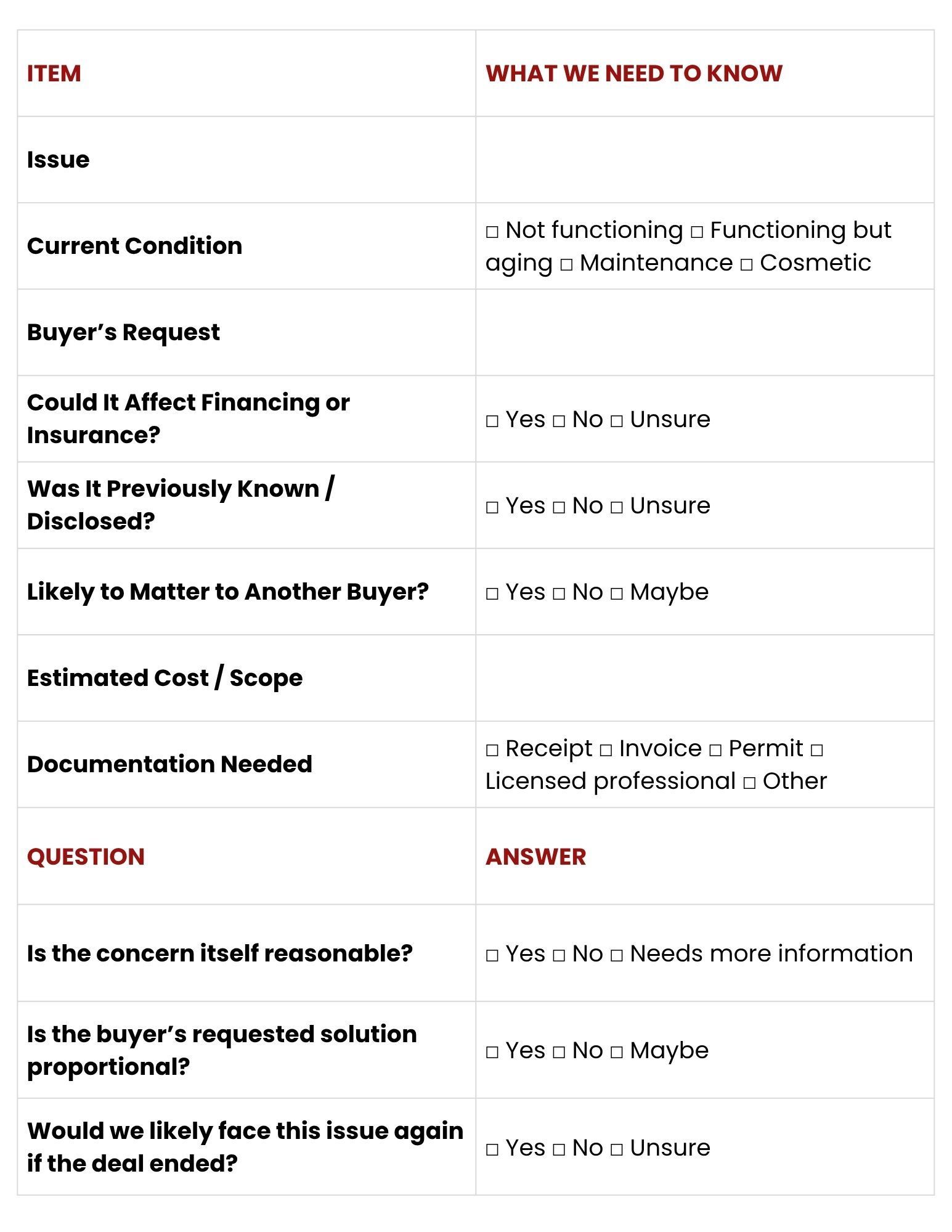
One of the easiest mistakes for a seller to make is treating the inspection report like a mandatory repair list.
It is not.
The report documents what the inspector observed within the scope of the inspection. The buyer then decides which of those observations matter enough to raise with the seller.
Those are two separate steps.
A long report may lead to a very small request. A short report may contain one issue the buyer considers serious.
That is why I would rather wait to see what the buyer is actually asking for before deciding we have a major problem.
Once we know that, we can start sorting the request by what it really represents: a current defect, future ownership risk, something that could affect financing or insurance, or simply a preference for something newer or better.
Not Every Inspection Concern Means the Same Thing
This is where the inspection conversation gets more nuanced.
Some issues are about what is happening today.
Others are about what might happen later.
An older HVAC system is a good example. If it is operating properly, the seller may reasonably see no defect to repair. The buyer may be looking at the same system and worrying about a major expense shortly after closing.
Those are two different concerns: current condition and future risk.
Age alone does not automatically make a component defective, and a seller should not assume that every older system needs to be replaced simply because it appeared in the report.
At the same time, the buyer’s concern may still matter if it affects how comfortable they are with the purchase—or if the condition could create issues with insurance, financing, or another part of the transaction.
That is why the first step is not deciding whether to say yes or no.
It is understanding what kind of problem we are actually dealing with.
The Best Solution Is Not Always the Repair the Buyer Requested
Once an issue deserves a response, the buyer’s proposed solution does not have to be the only solution.
A repair, seller contribution, and price adjustment can all affect the transaction differently.
A lower sales price does not necessarily give the buyer cash to complete work after closing. A seller contribution may be limited by financing or allowable costs. Completing the repair may solve the physical problem, but it also puts the seller in charge of contractors, timing, and the possibility that the work uncovers something larger.
So I would not treat those choices as interchangeable.
The better goal is to solve the actual concern in a way that works for both the property and the transaction.
Sometimes that means fixing the issue.
Sometimes it means handling it another way.
And sometimes the concern is valid, but the buyer’s requested remedy is more than the situation really calls for.
Be Careful What
You Agree to Repair
Once a seller agrees to make a repair, the expectation should be clear and complete.
That usually means more than simply saying something will be “fixed.”
The agreement should identify what is being repaired, who is expected to perform the work when that matters, and what documentation will be provided afterward. In practice, buyers often want receipts, invoices, permits when applicable, or proof that a licensed professional completed certain types of work.
That is not unreasonable.
The buyer is relying on the seller to complete work they may not have an opportunity to independently manage before closing, so documentation helps show what was actually done.
Clear repair language also protects the seller. If the scope is specific, there is less room for disagreement later over whether the buyer expected a replacement, a repair, or something more extensive than the seller intended.
And sometimes a repair reveals a larger issue once work begins. If that happens, it is much better to address it directly than to assume the original request still tells the whole story.
A good repair agreement should leave both sides with the same understanding of what will be done and how completion will be documented.
Keep the Whole Transaction in View
Inspection negotiations should not be evaluated as though the original deal disappeared the moment the report came back.
If the seller already accepted a lower price because the home needed updating, agreed to meaningful concessions, or chose this buyer because the overall terms were strong, that context still matters. New information may justify a new negotiation, but it should be weighed against the deal already in place.
The same is true when a seller becomes frustrated by a repair request. Saying no may feel justified in the moment, but the better question is what happens if that decision ends the contract.
If the property goes back on the market, the seller may now know more about the home than they did before. Depending on the facts and any applicable disclosure obligations, that information may need to be considered with future buyers. And if the issue is one another buyer is likely to discover and raise again, refusing to address it now may simply postpone the same conversation.
That does not mean the current buyer should get everything they ask for.
It means the seller should compare the request against the cost of starting over: additional days on market, another inspection, another negotiation, and the possibility of facing the same issue again.
At that point, the decision is no longer just about the repair. It is about whether keeping this transaction together still makes sense.
The Bottom Line
The inspection period is not about making an older home perfect.
It is about dealing with new information intelligently.
Some findings affect the transaction. Some mainly affect the buyer’s comfort level. Some can be repaired. Some are better handled another way. And some may not deserve a response at all.
The seller does not need to treat every inspection comment like a bill that suddenly became due.
But the seller should understand which issues could affect this buyer, the next buyer, financing, insurance, or the property’s ability to move forward.
Solve the problem that matters. Do not negotiate just to keep score.
Next in the Seller’s Reality Check Series:
👉 Appraisal, Financing & the Waiting Game (release date: 10/16/26)
👈 Previously:
Evaluating an Offer Beyond the Price
Start at the beginning:
Selling a Home, Clearly | The Seller’s Reality Check Series
Once the inspection period is behind you, the transaction often gets quieter.
That can make sellers feel like nothing is happening.
In reality, some of the most important work is taking place behind the scenes: the appraisal, underwriting, lender conditions, and the buyer’s path toward final loan approval.
That is what we will cover next.
Search Post
Recent Post










 Mr. Website Designer