
The Option Period Explained | The Buyer’s Reality Check Series
Due Diligence Phase

The option period is often where buyer stress returns—right after the relief of an accepted offer.
Inspections introduce new information, timelines tighten, and decisions become more technical without becoming any less personal. Concerns about hidden issues, unexpected costs, or whether the home still makes sense are common.
That is not doubt. It is due diligence.
The option period exists for a reason: to give buyers time to learn more before moving forward with greater commitment.
Used well, it creates clarity. Used poorly, it can create unnecessary anxiety.
What the Option Period Is
The option period is a short but important window to evaluate the home’s condition and decide whether it still aligns with your priorities, budget, and comfort level.
It is not about finding a perfect house.
It is about understanding this house clearly.
During this phase, buyers typically learn more about:
- Major systems and components
- Maintenance expectations
- Near-term and longer-term costs
- Issues that may affect livability, safety, or future decisions
The goal is perspective, not perfection.
Why Inspection
Reports Feel Overwhelming
Inspection reports are meant to be thorough. They document visible concerns, safety items, maintenance needs, and conditions that may deserve further evaluation. That detail is valuable—but the volume and tone can feel overwhelming.
Routine maintenance may sound more urgent than it is. More significant concerns can get lost in a long list of smaller items. Anxiety often comes not from the report itself, but from having too much information without a clear way to sort it.
Not every item is a major problem.
Not every repair is a deal-breaker.
The real task is deciding what meaningfully affects your comfort, your budget, or your willingness to move forward—and what does not.
Focus on Systems That Carry Real Impact
While every home is different, certain systems tend to carry more weight when evaluating risk, repair priorities, and future ownership costs:
- Electrical
- Plumbing and sewer
- Roof
- Foundation
- HVAC
- Drainage and water management
These areas deserve closer attention because they can affect safety, daily function, insurability, maintenance planning, and the long-term cost of owning the home.
Why Structure Matters in This Phase
Without structure, buyers often:
- Fixate on one issue while overlooking the bigger picture
- Feel rushed by option-period deadlines
- Struggle to separate meaningful concerns from routine maintenance
- Second-guess decisions because everything feels equally urgent
A clear framework helps organize the findings, identify patterns, assess potential impact, and decide more calmly.
This is where information becomes useful instead of overwhelming.
Using the Inspection
Review & Decision Worksheet
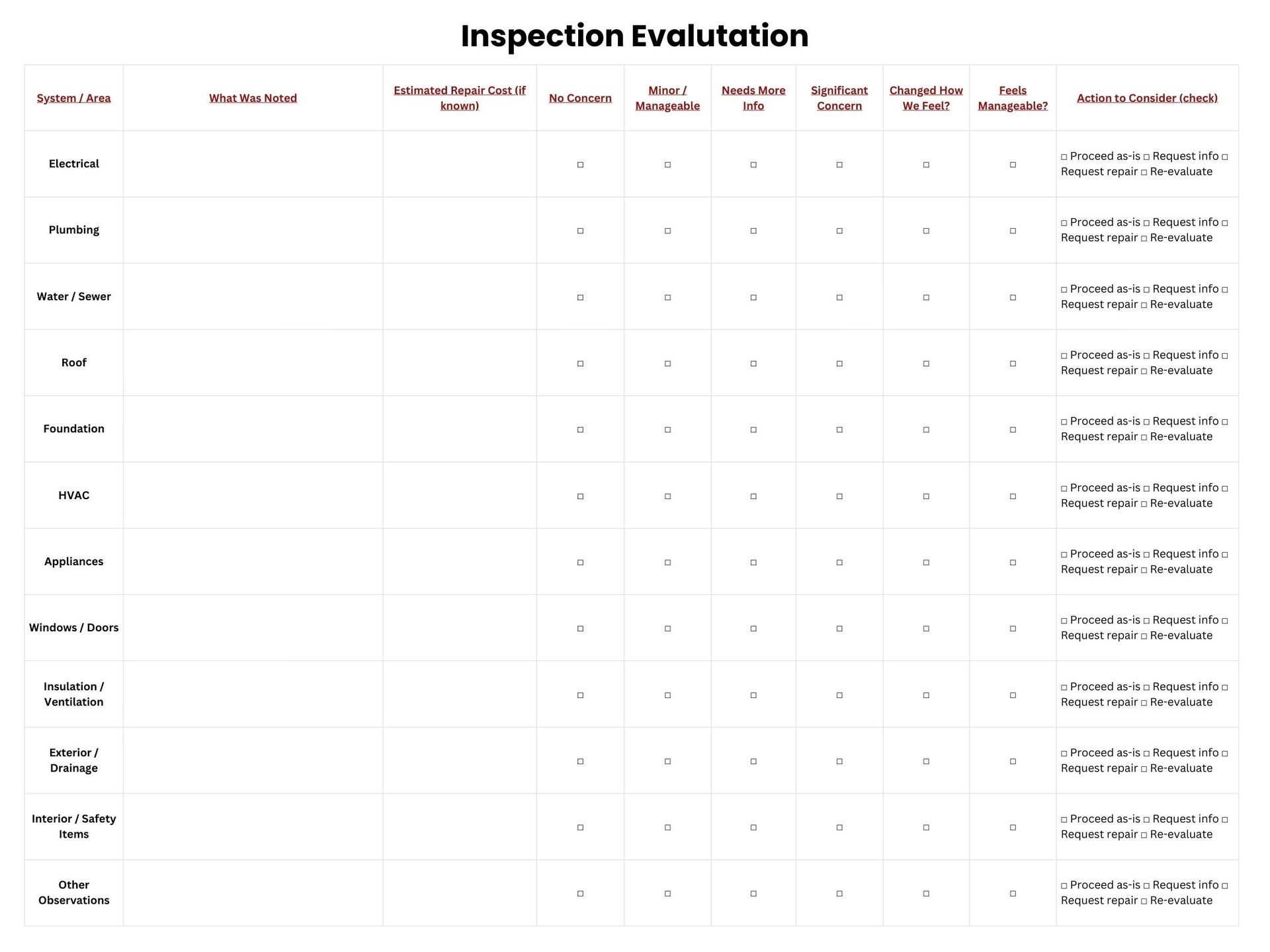
The Inspection Review & Decision Worksheet is designed to help buyers sort inspection findings by system, note potential impact, and think through what feels manageable before decisions are made. By slowing the process just enough, the tool helps separate information from reaction and keeps attention on the issues that matter most to you.
As inspection findings are reviewed, Cindy Coggins Realty Group remains involved throughout the option period to help coordinate next steps and, when appropriate, support conversations around repair requests, concessions, or other negotiation considerations tied to the findings.
Frequently Asked Questions About the Option Period
How long is the option period in Texas?
The length of the option period is negotiated in the contract. It can vary based on market conditions, property type, seller preferences, and the buyer’s needs. Buyers should pay close attention to the exact deadline in their signed contract.
What is the option fee?
The option fee is paid by the buyer for the unrestricted right to terminate during the option period. The amount and timing are negotiated in the contract, and buyers should make sure it is delivered according to the contract requirements.
Can a buyer terminate during the option period?
In many Texas residential contracts, the buyer may have the right to terminate during the option period if that right was negotiated and properly included. Buyers should review their contract carefully and follow all required deadlines and notice procedures.
Should buyers attend the home inspection?
Many buyers choose to attend part of the inspection or meet the inspector near the end. This can be helpful because the inspector may explain findings in person, point out maintenance items, and help the buyer better understand the home.
What inspections should buyers consider?
In addition to a general home inspection, buyers may consider inspections or evaluations for the sewer line, foundation, roof, HVAC, pool, septic system, well, pests, drainage, or other property-specific concerns. The right inspections depend on the home.
Who pays for repairs after the inspection?
Repair requests are usually part of a negotiation between buyer and seller. A seller is not automatically required to fix every item found in an inspection, so buyers should focus on the issues that matter most to their decision.
Can buyers ask for money instead of repairs?
Sometimes buyers may request a seller concession instead of asking the seller to complete repairs. Whether that is possible depends on the contract, loan type, lender rules, seller agreement, and closing-cost limits.
What happens when the option period ends?
Once the option period ends, the buyer’s unrestricted right to terminate may no longer apply. From that point forward, the buyer should understand which contract terms, deadlines, and contingencies still remain.
Why is timing so important during the option period?
The option period is deadline-driven. Inspection scheduling, repair estimates, negotiations, and any termination decision must happen within the agreed timeframe. Waiting too long can limit the buyer’s options.
Continue the Buyer Journey
Previously:
👉Writing an Offer Without Regret
Next:
After due diligence, the process often becomes quieter. Appraisals and underwriting can bring longer timelines, fewer updates, and a different kind of buyer stress—the waiting game.
Making Informed Buying
Decisions Across North Texas & DFW
If you are planning to buy a home in Princeton, Lucas, Gunter, or anywhere across North Texas and the DFW area, Cindy Coggins Realty Group can help you evaluate your options, understand how local market conditions may affect your decisions, and move forward with greater clarity at every stage of the process.
When you are ready, reach out to start the conversation and move forward with confidence.
Message Cindy to receive your complete copy of the Buyer’s Reality Check Series and buy with clarity instead of guesswork.
📞
Call or Text:
(469) 499-7452
📧
Email:
cindycoggins@kw.com
⭐
See why so many clients trust us—check out our 5-star reviews on Google.
Disclaimer:
This series is provided for general educational purposes only and is not intended as legal, financial, tax, lending, inspection, insurance, or real estate advice. Every buyer’s situation is different, and market conditions, loan requirements, contract terms, property conditions, timelines, and transaction decisions can vary. Readers should verify information independently and consult the appropriate professionals, including a real estate agent, lender, inspector, insurance provider, title company, attorney, CPA, and other qualified advisors as needed. Information is deemed reliable but not guaranteed.
Search Post
Recent Post









 Mr. Website Designer