
2026 Home Appraisal Changes: What Buyers and Sellers Need to Know
New Appraisal Rules, New Expectations: What Could Change for Your Home Purchase or Sale?

Home appraisals are undergoing one of their biggest reporting changes in decades. The goal is clearer information, more consistent reports, and a more efficient mortgage process. But industry experts are concerned about possible increases in costs and closing times.
Beginning November 2, 2026, Fannie Mae and Freddie Mac began requiring a redesigned appraisal report for new submissions, with temporary exceptions for certain lenders.
Whether you're buying or selling, these changes could affect what information appears in an appraisal, how easily you can understand the findings, and how long the process takes.
Here's what's changing, what experts expect, and what it could mean for your transaction.
Why Are Home Appraisals Changing in 2026?
When you buy a home with a mortgage, the lender often requires an appraisal—an independent professional opinion of the property's value.
Appraisers consider the home's condition, features, location, and comparable sales (similar properties that have recently sold) to determine its market value.
For decades, they've documented their findings using standardized forms that weren't always well suited to describing different types of properties consistently.
The new reporting system, called Uniform Appraisal Dataset 3.6 (UAD 3.6), is designed to address those limitations.
Fannie Mae and Freddie Mac, two major organizations that purchase and guarantee mortgage loans, want to make property information easier to collect, compare, and review.
The anticipated benefits include more consistent reporting, fewer requests for corrections, and more efficient mortgage processing.
The goal isn't to change how much homes are worth. It's to improve how the information supporting that value is documented and reviewed.
What Do the New Home Appraisal Rules Actually Change?
Previously, appraisers generally assigned an overall condition rating to a home and provided written explanations about renovations, maintenance concerns, and other property characteristics.
The redesigned report provides more specific places to document individual components, including kitchens, bathrooms, flooring, and exterior features.
For example, a home might have a completely renovated interior but an aging roof and exterior maintenance concerns.
The new report allows the appraiser to distinguish those conditions more clearly rather than relying primarily on an overall rating and supporting comments.
Other changes include:
- Living areas: More detailed reporting of finished spaces, additions, and separate living quarters.
- Location and surroundings: More specific descriptions of features such as busy roadways, greenbelts, or unusual lot characteristics.
- Comparable sales: More structured information about properties used to support the appraised value.
- Report presentation: Clearer summaries and photographs organized alongside relevant property details.
For buyers and sellers, the potential benefit is a report that's easier to understand and review for accuracy.
Will renovations be worth more under the new appraisal rules?
Not necessarily.
A $30,000 kitchen remodel doesn't automatically add $30,000 to a home's appraised value. Appraisers still consider what buyers are willing to pay for those improvements based on comparable sales.
For sellers: Keep a record of major improvements, including completion dates. Also verify your home's reported square footage, especially if you've added or converted living space. Accurate information can help prevent misunderstandings during the appraisal.
Will Home Appraisal Costs and Wait Times Increase?
This is one of the industry's biggest concerns.
An August 2026 survey by Corporate Settlement Solutions gathered responses from 863 appraisers in its professional network.
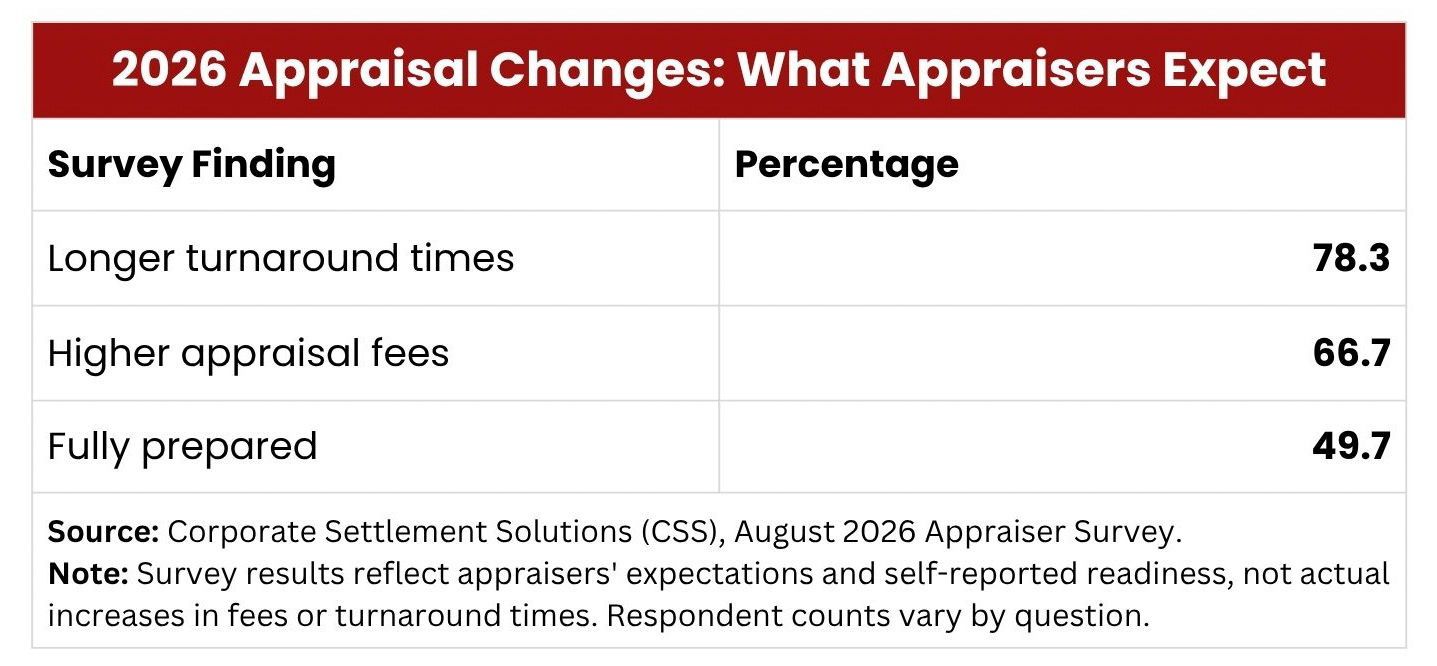
The additional reporting requirements, software changes, and information verification may initially increase workloads.
However, not all experts expect lasting problems.
During a September 2026 Texas REALTORS® webinar, Fannie Mae senior manager Ken DeFeo suggested appraisers could become substantially more efficient after completing several reports using the new system.
Texas appraiser Jason Ault also encouraged realistic closing timelines without automatically extending every transaction.
What should buyers do?
Before scheduling an appraisal, ask your lender about the estimated fee, expected completion time, and whether a delay could affect your closing date or mortgage rate lock (an agreement to hold a particular interest rate for a specified period).
For sellers coordinating another home purchase, confirming the appraisal timeline early can also help avoid scheduling conflicts.
Will the New Appraisal Reports Be More Accurate?
More detailed information could make appraisal reports easier to review, but it doesn't guarantee a more accurate value.
Consider a home with newly installed energy-efficient windows.
The new report may describe those windows in greater detail. But if the available comparable sales don't include reliable information about their windows, determining the market value of that improvement may still be difficult.
Some appraisal professionals have raised concerns about collecting more property details without having equally complete information about comparable homes.
Others see the potential for better consistency and fewer reporting errors over time.
For buyers: When you receive an appraisal, review the property descriptions for factual errors, such as incorrect square footage or missing improvements. If you identify a legitimate concern, ask your lender about a reconsideration of value (a formal process for reviewing an appraisal using relevant evidence).
Remember, an appraisal is not a home inspection and should not be treated as a guarantee of the property's condition.
What Happens if a Home Appraisal Comes in Low in Texas?
The new reporting system doesn't eliminate appraisal gaps.
Suppose you agree to purchase a home for $450,000, but the appraisal comes back at $430,000.
The buyer and seller might renegotiate, the buyer might contribute additional funds, or a legitimate appraisal error might warrant further review.
However, a low appraisal doesn't automatically require the seller to lower the price or allow a Texas buyer to cancel the contract and recover earnest money (the deposit provided when entering into a purchase agreement).
Those rights depend on the contract, financing terms, and applicable appraisal addenda (additional contract documents).
Practical takeaway: Before making or accepting an offer, understand what your Texas contract allows if the appraisal comes in below the purchase price. Waiting until the appraisal is completed may limit your options.
How Can Buyers and Sellers Prepare for a Home Appraisal?
You don't need to understand the technical details of the new forms, but a few steps can help reduce surprises.
If you're selling:
- Price using relevant comparable sales, not just online estimates or neighboring asking prices.
- Document improvements, including major repairs, renovations, and system replacements.
- Verify property details, particularly square footage, additions, and converted spaces.
- Evaluate repairs before spending money, and meet applicable Texas seller disclosure requirements.
If you're buying:
- Understand your contract's appraisal provisions before signing.
- Discuss financing scenarios with your lender in case the appraisal is lower than expected.
- Investigate unusual property features, including additions, separate living areas, and nearby development.
- Confirm appraisal fees and timing early in the mortgage process.
These steps won't guarantee a particular appraisal result, but they can help you identify potential problems before they affect your transaction.
Will the 2026 Appraisal
Changes Benefit Buyers and Sellers?
The redesigned reports have the potential to improve transparency, consistency, and mortgage processing efficiency.
However, the industry is still adjusting, and concerns about additional costs, longer processing times, and reporting errors are legitimate.
As of November 2026, it's too early to determine whether the long-term benefits will outweigh those challenges.
For buyers and sellers, the most important thing hasn't changed: understanding the property's characteristics, reviewing reliable comparable sales, and preparing for potential financing issues remain essential.
Thinking About Buying or Selling in North Texas?
At Cindy Coggins Realty Group, we help buyers and sellers throughout Collin, Denton, and Grayson counties understand local market conditions, evaluate comparable properties, and make informed decisions.
Whether you're preparing to list your home or considering a purchase, we're happy to help you review your options and identify potential concerns before they become costly surprises.
Have Questions About Your Home's Value? Let's Talk.
📞
Call or Text:
(469) 499-7452
📧
Email:
cindycoggins@kw.com
⭐
See why so many clients trust us—check out our 5-star reviews on Google.
Sources:
Fannie Mae — Uniform Appraisal Dataset (UAD 3.6)
https://singlefamily.fanniemae.com/delivering/uniform-mortgage-data-program/uniform-appraisal-dataset
Freddie Mac — UAD 3.6 and Forms Redesign FAQs
https://sf.freddiemac.com/faqs/uad-and-forms-redesign
Corporate Settlement Solutions — August 2026 Appraiser Survey
https://visitcss.com/resources/lending-insights/uad-3-6-appraiser-survey
Texas REALTORS® — 5 Takeaways From the Appraisal Webinar
https://info.texasrealestate.com/broker-advantage-features/5-quick-takeaways-from-last-weeks-appraisal-webinar
Texas REALTORS® — Third Party Financing Addendum
https://www.texasrealestate.com/legal-and-ethics/legal-resources/legal-faqs/trec-third-party-financing-addendum
Disclaimer:
This article is for general educational purposes and reflects information available as of November 16, 2026. Appraisal requirements vary by lender, loan type, and property. Fees, timelines, and contract rights depend on individual circumstances. Property information should be independently verified. This article is not legal, financial, tax, lending, or appraisal advice. Consult the appropriate professionals for guidance specific to your transaction.
Search Post
Recent Post











 Mr. Website Designer